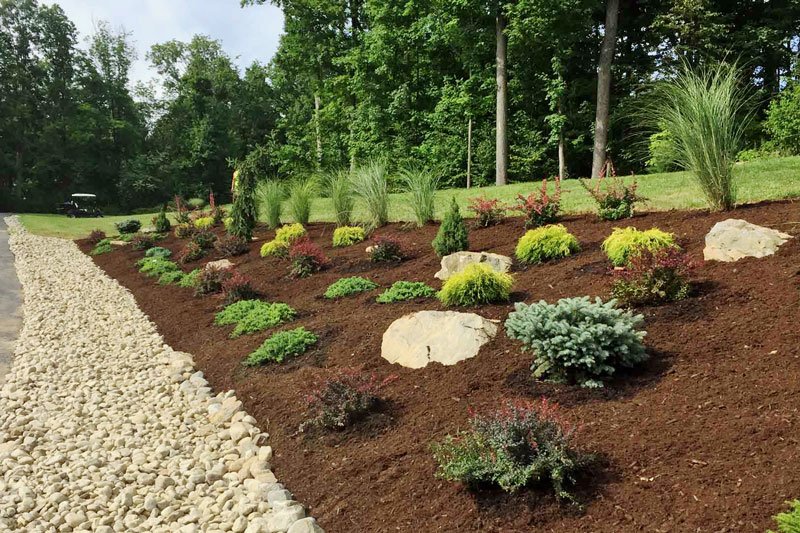
Crusher Dust vs. Gravel for Driveways and Patios: Which is Right for Your Fraser Valley Property?

Crusher Dust vs. Gravel for Driveways and Patios: Which Is Right for Your Fraser Valley Property?
The Decision Most Fraser Valley Property Owners Get Wrong
Every spring at Langley Landscape Centre, we answer the same question from homeowners standing in front of our aggregate section: should I use crusher dust or gravel for my driveway? The answer depends on what you are building — and choosing the wrong material leads to either a dusty, shifting driveway surface or a patio base that cannot achieve the level, stable finish that pavers require.
This guide covers the practical differences between crusher dust and road mulch gravel for the most common Fraser Valley applications: driveways, patio bases, pathways, and rural access roads.
Understanding the Materials
What Is Crusher Dust?
Crusher dust — also called 5/16 minus or stone dust — is produced when larger rocks are crushed in a quarry. The name describes both the material and the maximum particle size: nothing passes through the screen larger than 5/16 of an inch. The particle mix contains fine dust all the way up to small fragments. When wetted and compacted, the fines fill the voids between larger particles and the material sets to a firm, dense surface.
At Langley Landscape Centre, crusher dust is $62 per cubic yard. It is our third-highest-selling aggregate product, behind red bark mulch and road mulch.
What Is Road Mulch (3/4 Minus)?
Road mulch — properly called 3/4 minus — is a coarser crushed aggregate blend containing particles from 3/4 inch down to fines. It is the standard material for unsealed driveways and rural access roads in BC and performs well under regular vehicle loads. At $55 per cubic yard, it is slightly more affordable than crusher dust. Our 1 inch minus recycled road base is even more economical at $40 per cubic yard and performs similarly for most residential driveways.
Head-to-Head Comparison
| Factor | Crusher Dust (5/16″) | Road Mulch (3/4″ Minus) |
|---|---|---|
| Best use case | Patio base under pavers, garden pathways, compacted foot-traffic surfaces | Driveways, rural access roads, construction staging areas |
| Vehicle load | Suitable for occasional light vehicle use, not daily heavy traffic | Designed for regular vehicle traffic including trucks and trailers |
| Drainage | Low drainage — fines reduce permeability, surface sheds water | Moderate drainage — coarser particles allow more water infiltration |
| Compaction result | Near-concrete firmness when properly compacted and wetted | Firm and stable but retains slight flexibility under loads |
| Surface smoothness | Smooth, level — excellent for screeding paver bases | Rougher surface, not suitable as a finished paver base layer |
| Dust in dry weather | Can generate dust if not regularly wetted or sealed | Less dust due to coarser particle mix |
| Cost per yard | $62 per cubic yard | $55 per yard (road mulch) or $40/yard (recycled road base) |
| Settlement period | Minimal once compacted — very stable | Settles further under vehicle traffic over weeks 1–4 |
Fraser Valley Drainage Considerations
One factor that makes this decision more important in the Fraser Valley than in drier regions: our rainfall. Langley receives approximately 1,200 to 1,500 mm of annual precipitation, with the bulk falling between October and March. An improperly drained driveway or patio base will soften, sink, and shift through a typical Fraser Valley winter.
For driveways
Road mulch handles drainage better than crusher dust for vehicle surfaces. The coarser particle mix allows water to percolate through the surface layer rather than pooling. Crown the driveway slightly (higher in the centre) to direct water to both edges. For sloped driveways, consider a cross-culvert or drainage channel at the base to manage concentrated water flow.
For patio bases
Under paver stones and flagstone, a layered system works best in Fraser Valley conditions: 4 to 6 inches of compacted clear crush or road mulch as the sub-base (for drainage and stability), followed by 1 to 1.5 inches of crusher dust as the finished levelling layer. This combination keeps the patio surface stable and level through wet winters while providing the tight compaction needed for pavers to resist movement.
Application by Project Type
Residential Driveway (Light Vehicle Traffic)
Recommended material: 3/4 minus road mulch or 1 inch minus recycled road base. Apply a minimum of 4 inches of compacted material on a prepared subgrade. Compact in two lifts (two passes) for best results. Expect the surface to firm up further over the first four to six weeks of vehicle use as the fines consolidate. Budget approximately 7 to 8 cubic yards for a standard 2-car driveway (20 feet wide × 40 feet long × 4 inches deep).
Rural Access Road or Acreage Driveway
Recommended material: 1 inch minus recycled road base at $40/yard for budget-conscious projects, or 3/4 minus road mulch for higher-traffic situations. For roads carrying pickup trucks and trailers regularly, use 6 inches of compacted depth rather than the standard 4 inches. Plan for a top-up layer after the first winter as settling continues under load.
Patio Base Under Pavers or Flagstone
Recommended system: 4 inches of compacted 3/4 minus road mulch as sub-base, then 1 to 1.5 inches of crusher dust as the levelling and screeding layer. The road mulch provides load distribution and drainage. The crusher dust provides the fine, stable surface needed for pavers to sit level and lock together. Do not use crusher dust alone as the full patio base — it lacks the drainage capacity for a proper patio installation.
Garden Pathways and Pedestrian Surfaces
For garden paths and walkways with foot traffic only, crusher dust used alone at 2 to 3 inches over a compacted subgrade is the right choice. It creates a firm, clean-looking surface that does not shift underfoot and drains adequately for pedestrian use. Wet and compact after installation. Top up annually with a thin layer to maintain surface quality.
Paver Base Around Swimming Pools
Crusher dust is standard practice for pool surrounds in BC where drainage away from the pool is managed by grade and channel drains. Use 1.5 inches of crusher dust over a 4-inch clear crush or road mulch sub-base. Ensure the grade slopes away from the pool perimeter at a minimum 1 percent slope (1/8 inch drop per foot).
How Much Do You Need?
The formula: Length (ft) × Width (ft) × Depth (inches) ÷ 324 = cubic yards.
| Project | Dimensions | Depth | Cubic Yards (approx) |
|---|---|---|---|
| Standard 2-car driveway | 20 × 40 ft | 4 inches | 9.9 yards |
| Single car driveway | 10 × 40 ft | 4 inches | 4.9 yards |
| 100 sq ft patio base | 10 × 10 ft | 5.5 inches combined | 1.7 yards total |
| Garden pathway | 4 × 30 ft | 2.5 inches | 0.9 yards |
| Rural access road (50 ft) | 12 × 50 ft | 6 inches | 11.1 yards |
Freeze-Thaw Performance in the Fraser Valley
Unlike most of Canada, the Fraser Valley does not experience sustained deep freezes. Our freeze-thaw pattern — temperatures that cycle above and below zero repeatedly through November to February — is actually more damaging to poorly installed surfaces than a single sustained freeze. Each freeze-thaw cycle can move material that is not well-compacted, leading to heaving, rutting, and edge failures.
The best protection against freeze-thaw damage in Langley driveways is adequate depth (never less than 4 inches), proper compaction before winter, and a slight crown or cross-fall to drain surface water before it freezes in place.
Where to Buy Crusher Dust and Road Mulch in Langley
Langley Landscape Centre at 24460 Fraser Hwy carries crusher dust at $62/yard, 3/4 minus road mulch at $55/yard, 1 inch minus recycled road base at $40/yard, and 1/2 inch clear crush at $80/yard. All products are available for delivery to Langley, Aldergrove, Surrey, and Abbotsford, or pick-up at the yard any day from 7 AM to 7 PM.
Call (604) 735-5333 to discuss your project and get a quantity recommendation. We are happy to calculate how much of each material you need for a two-layer patio system or a measured driveway — it takes under two minutes.